
Crochet leaves are among the most versatile small motifs you can make. They work beautifully as decorative accents on blankets, baby items, scarves, bags, table runners, and even as standalone embellishments for gift wrapping and floral arrangements. Because they are quick to finish and use very little yarn, they are perfect for beginners who want to practice shaping while creating something that looks detailed and refined.
A crocheted leaf teaches several important concepts in a friendly way. You learn how to create gentle curves, how to balance height changes within a shape, and how to finish edges neatly so that the motif lies flat. These skills are useful far beyond this single project and can be applied later to petals, flowers, and more advanced textured designs.
This guide explains the overall flow of making crochet leaves inspired by the video tutorial you shared. Instead of listing exact stitch-by-stitch instructions, it focuses on the structure, shaping logic, and finishing ideas so you can understand how the leaf comes together and how you might adapt it for your own creative projects.
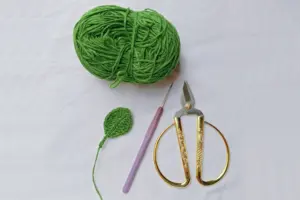
Materials Needed
Based on the tutorial, the following supplies are used to create this type of crochet leaf. Choosing soft, flexible yarn will help your leaf drape naturally and maintain its shape.
-
Medium weight yarn suitable for decorative projects
-
Crochet hook that matches the yarn recommendation
-
Scissors
-
Yarn or tapestry needle
These simple tools are enough to create multiple leaves for a variety of crochet designs and embellishments.
Abbreviations
Crochet patterns often use shortened terms to make instructions easier to read. The following abbreviations are commonly used in leaf-style crochet motifs and are written in US terminology.
-
ch – chain
-
sc – single crochet
-
hdc – half double crochet
-
dc – double crochet
-
tr – treble crochet
-
sl st – slip stitch
-
st – stitch
Understanding these abbreviations will make it easier to follow patterns and modify designs as your confidence grows.
Creating the Central Backbone
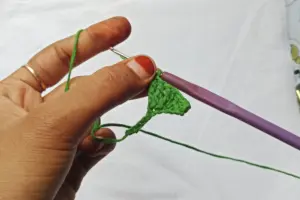
Every crochet leaf begins with a narrow central line that acts as the backbone of the design. This backbone guides the overall length and determines how wide the leaf will appear once both sides are shaped.
At this stage, the goal is to form a smooth and flexible base that can support decorative shaping. Keeping your tension even helps prevent curling and ensures that the leaf will lie flat when finished.
Building the First Side Curve
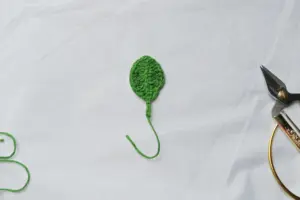
Once the central line is ready, one side of the leaf is formed using a gradual increase in stitch height. This change in height creates a natural curve that mimics the way real leaves widen toward the center.
The shaping starts gently, grows fuller near the middle, and then tapers again. This smooth transition is what gives the leaf its soft, organic appearance.
Mirroring the Opposite Side
After completing the first side, the design is mirrored on the opposite edge. This creates balance and symmetry, which are essential for a visually pleasing leaf shape.
Mirroring also helps beginners understand how crochet shapes can be built by repeating similar movements in reverse order. The second side often feels easier because you are already familiar with the flow of the design.
Forming the Leaf Tip
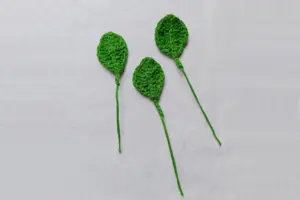
The tip of the leaf is where both sides come together. This area is shaped carefully so that it looks pointed but not sharp. A gentle taper keeps the design elegant and prevents bunching at the end.
At this point, the leaf begins to look complete, and only the finishing details remain.
Adding Surface Definition
Surface detailing adds dimension and realism to the crochet leaf. By working along the center line, you can create a raised vein that resembles the natural structure of a real leaf.
This subtle detail makes a big visual difference and helps your leaf stand out when used as part of a larger crochet project.
Creating a Small Stem
A small stem gives your crochet leaf more versatility. It allows you to attach the leaf easily to garlands, wreaths, flowers, or other crochet motifs.
The stem can be kept short for simple embellishments or made longer if you plan to bundle multiple leaves together for decorative arrangements.
Weaving and Securing Yarn Ends
The final step is to hide loose yarn ends within the fabric of the leaf. Proper finishing keeps the leaf neat and prevents unraveling.
Taking time to weave in ends carefully ensures that your leaf remains durable, even when used on items that are handled frequently.
How Crochet Leaves Are Commonly Used
Crochet leaves can be applied in many creative ways. Their small size and soft shape make them easy to attach to a wide range of handmade items, instantly adding detail and personality.
Common uses include:
-
Decorative accents on hats, scarves, and shawls
-
Appliqués on baby blankets and garments
-
Embellishments for bags and pouches
-
Elements in crochet flowers, wreaths, and garlands
-
Add-ons for gift wrapping and handmade cards
Because they are lightweight, they do not pull on the fabric they are attached to, making them ideal for delicate projects.
Choosing Yarn for Different Effects
The yarn you choose changes how your crochet leaves look and feel. Softer yarns create gentle, flowing leaves, while firmer yarns produce crisp edges and defined shapes.
Here is a helpful guide for selecting yarn based on your desired result.
| Yarn Type | Look and Feel | Best Uses |
|---|---|---|
| Acrylic | Light and flexible | General decoration |
| Cotton | Crisp and structured | Table décor and coasters |
| Bamboo blend | Smooth and drapey | Garments and shawls |
| Wool blend | Plush and warm | Winter accessories |
Trying the same leaf design in different yarns is a great way to explore texture and drape.
Care and Maintenance
Crochet leaves are easy to care for, especially when made with durable yarn. Keeping them clean and well-shaped will extend their life and maintain their appearance.
Simple care tips include:
-
Gently hand wash if needed
-
Avoid twisting or wringing
-
Lay flat to dry
-
Store in a dry place away from direct sunlight
These steps help preserve the shape and surface detail.
Why This Is a Great Beginner Project
This crochet leaf project is ideal for beginners because it teaches shaping in a gentle, rewarding way. The changes in stitch height introduce natural curves without complicated techniques.
Benefits of starting with crochet leaves include:
-
Fast completion time
-
Low yarn usage
-
Easy repetition for practice
-
Instant decorative results
Making several leaves in one sitting is a great way to build muscle memory and improve consistency.
Summary and Action Point
Crochet leaves are a versatile, beginner-friendly motif that can be used in countless creative projects. By forming a central backbone, shaping balanced sides, adding surface definition, and finishing with a neat stem, you can create detailed leaves that enhance your crochet work.
